A great photoshoot is 60% what happens on the day and 40% the prep work done beforehand.
You don’t need to spend weeks stressing, but a little bit of groundwork makes the difference between a session that feels rushed and one that is relaxed and productive.
If you’ve got a session in the diary, here are the best tips on how to get both yourself and your horse ready for the session.
Clean Horse: Not Wet or Greasy
You want your horse to look like the best version of themselves. A deep clean and a natural shine are what we’re after so please avoid the horse being wet or oil rising dirt from the coat on the day itself.
- Brush, trim and bath (or hot cloth/oil) the day before and then rug up overnight. Warning: skip the same day baths and lots of oily products.
- Avoid any clipping the week of your photoshoot.
- Clean away any stable dust from eyes and nostrils.
- Give the hooves a quick scrub with water and a firm brush. Whether you use hoof oil or leave them natural is up to you, but they should be clean. If we are stepping into a sand arena you are better off with no sticky oil.
- If you usually plait for competition, feel free to do so, but most Caletto sessions still look fantastic with a clean, flowing "natural" mane (and if any is missing leave that to me).
- If you have stable stains from over night adventures either spot clean them as early as possible so they are not wet or just use a firm brush and I will tidy them back up in edit (it happens).
Tack Matters
In a high resolution portrait, your tack is just as visible as the horse. Being ready a few days beforehand can really elevate your horse's portrait.
- Leatherwork should ideally be supple and clean. Please avoid over-oiling on the day, as we don't want it rubbing off onto your clothes.
- This is the time to clean the buckles, or to wear that brand new/show bridle for the occasion.
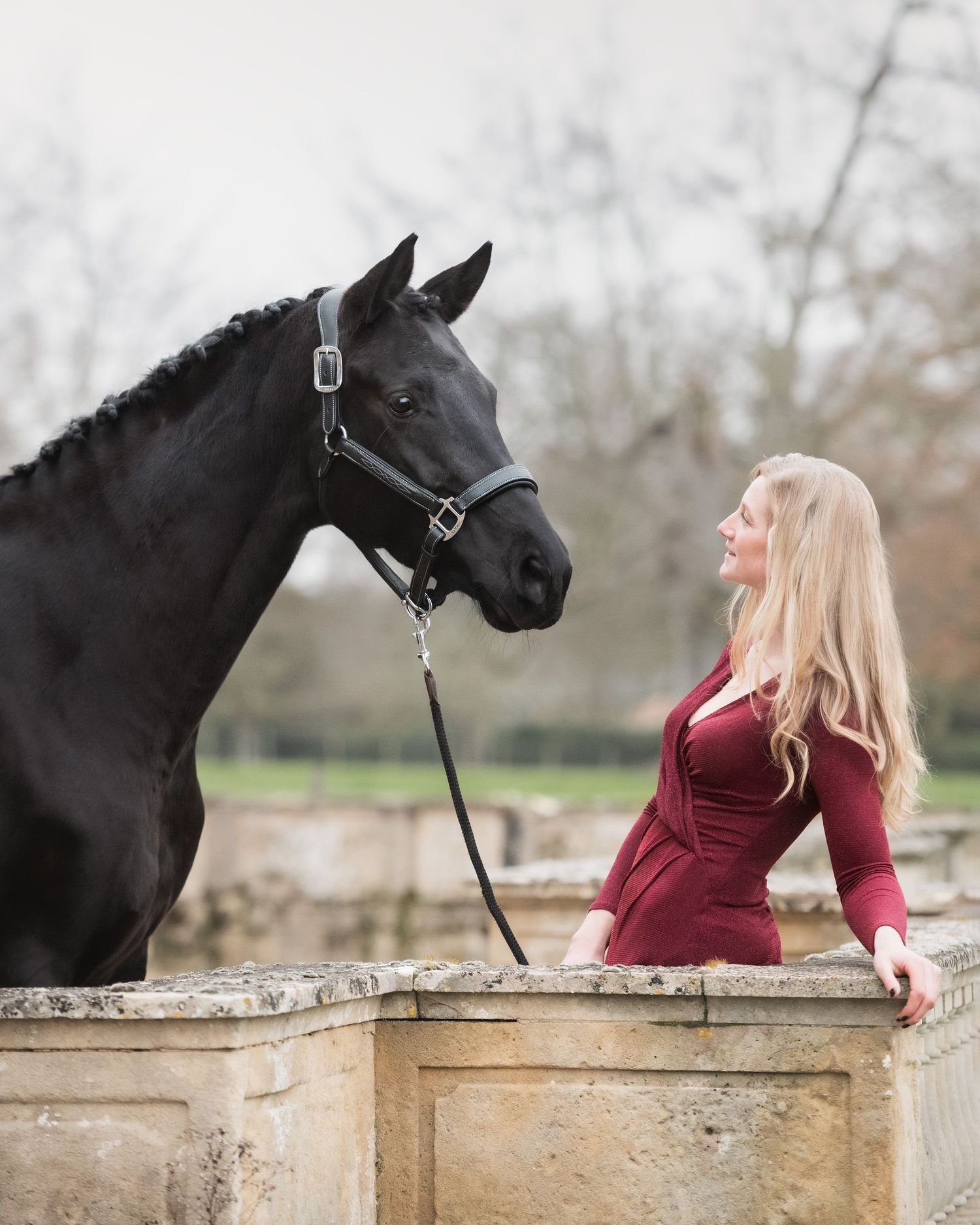
- If you would like to opt for a headcollar, then in my opinion a leather one always looks the smartest.
- Although I can tidy up a bit ring that hasn't seen a good scrub, a sparkling bit makes a difference in a close-up headshot.
- If we are doing "Black Background" work, I often use a specialist plaited nylon rope halter and will bring this with me to session for the "Invisible" look.
- A shoot is not the time to try something new tack wise, as your horse thrives in situations it knows best.
Your Wardrobe
Even if you aren't the main focus, or even sure if you want to be in the images at the start, you are an essential part of the partnership. Your outfit should complement your horse and the environment, not compete with it.
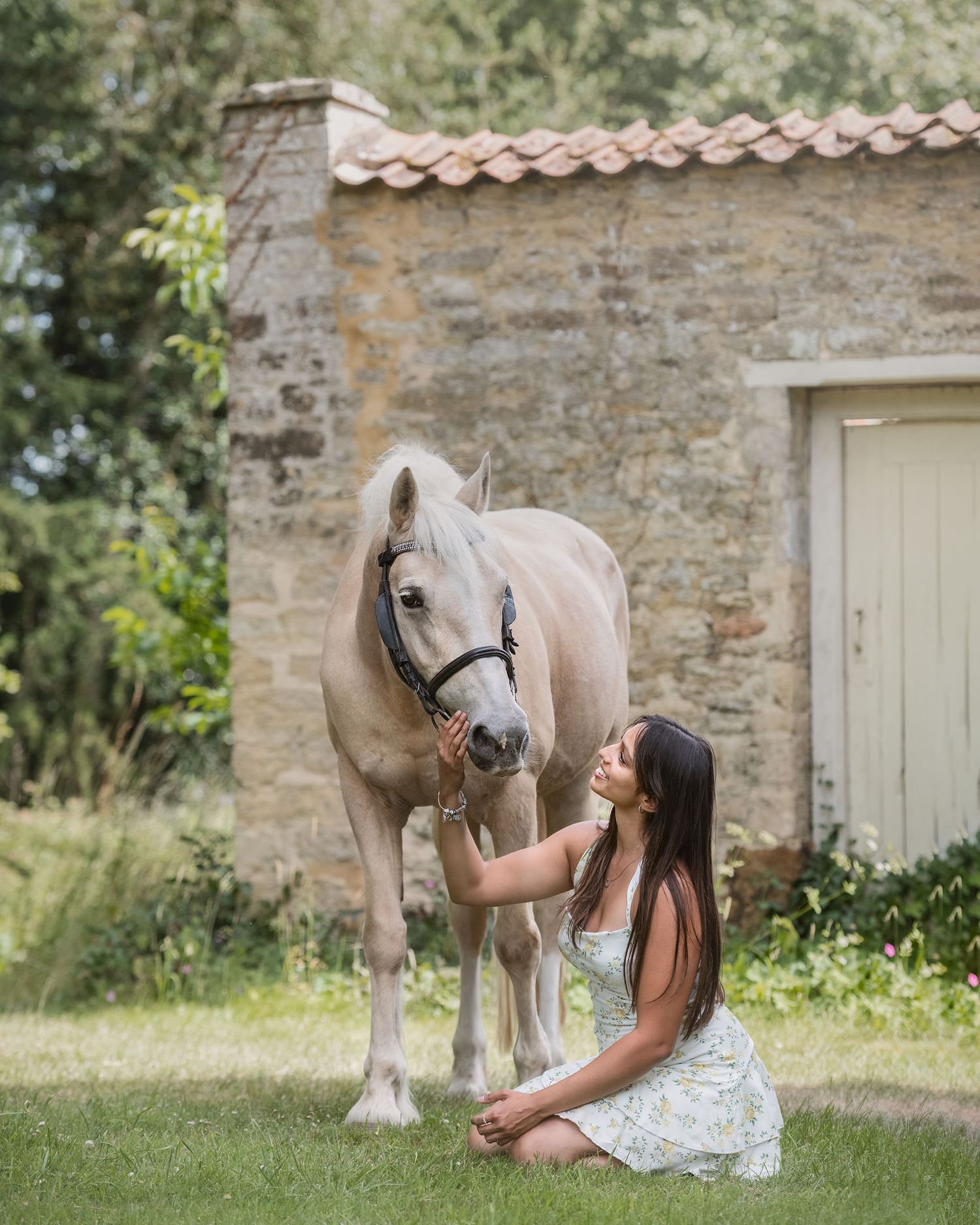
- Earthy, neutral tones (olive, navy, tan, cream,brown,beige) always work best. Avoid any neon colours, heavy patterns, or big logos, as they date very quickly and distract from the horse.
- If you are wearing your favourite light coloured bottoms, choose dark tops or vice versa.
- If you are wearing your favourite tight top, then opt for looser bottoms and vice versa.
- If you are wearing a lot of texture in your top, go for simple fabrics at the bottom, or vice versa.
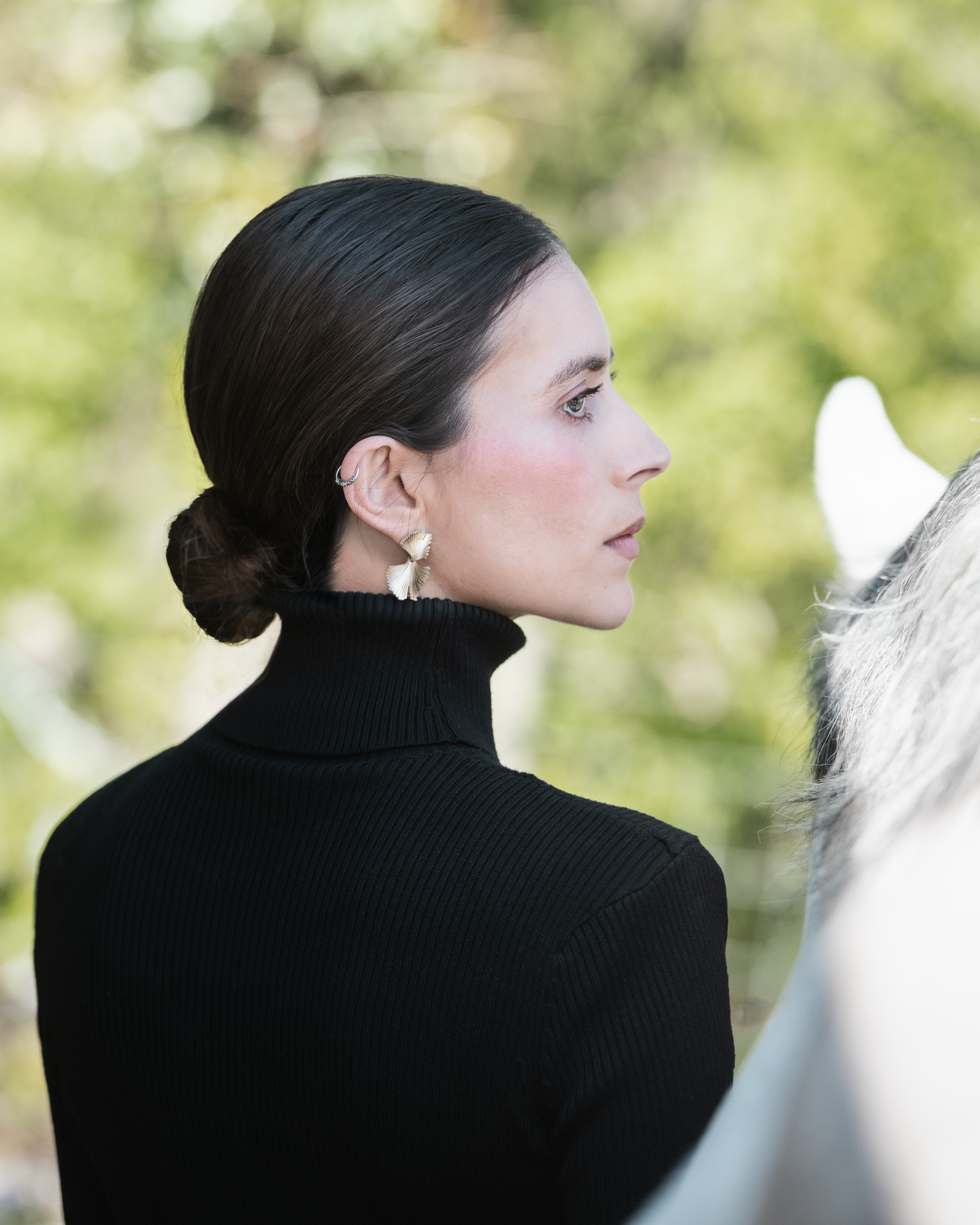
- Unpopular opinion: Avoid wearing all black or all white, unless we have planned this into the shoot styling. Whites can be very reflective in green surroundings and blacks too contrasting for a soft portrait.
- Split your outfit anywhere but the middle of your body if you are unsure - longer bottoms with a higher waist add height for example.
- Accessories are better simple and matching to your shoes unless intentionally styled.
- Texture and fit always win over a 'Trend'. Thick knits, tweed, or suede look incredible on camera. They add a "luxury" feel that flat cotton doesn't.
- You’ll be walking in fields or on stable floors. Wear boots or shoes you can practically move in, but that still look smart.
- Neat natural nails will always be timeless.
Clear the "Yard Clutter"
We want the focus entirely on the horse. While I can edit out a lot in post-production, it’s always better to start with a clean surroundings.
A cluttered barn aisle is a distracted mind. I help ensure walkways are clear and exits stay accessible so that safety remains a silent background thought, never a constant worry.
If we are shooting in the stable doorway or the arena, try to move the everyday 'stuff' such as buckets, wheelbarrows, or haynets out of the immediate line of sight. If we are heading out into a field, I’ll usually take a walk with you first to find the best light and the cleanest natural backgrounds.
Low Pressure Mindset
The most important thing you can bring to a session is a relaxed attitude. Horses are mirrors; if you are stressed about them standing perfectly still, they will feel it and worry why. Feel confident that on your photoshoot with Caletto:
- Positions are demonstrated and set up for success before the camera comes up, ensuring your horse feels prepared and you are both confident in every shot.
- Focus is always on your genuine bond rather than rigid posing. I see the quiet language of your partnership. It’s in the way the two of you occupy the same space. I’m looking for the subtle cues that define your specific bond—the details that make your horse unmistakably yours.
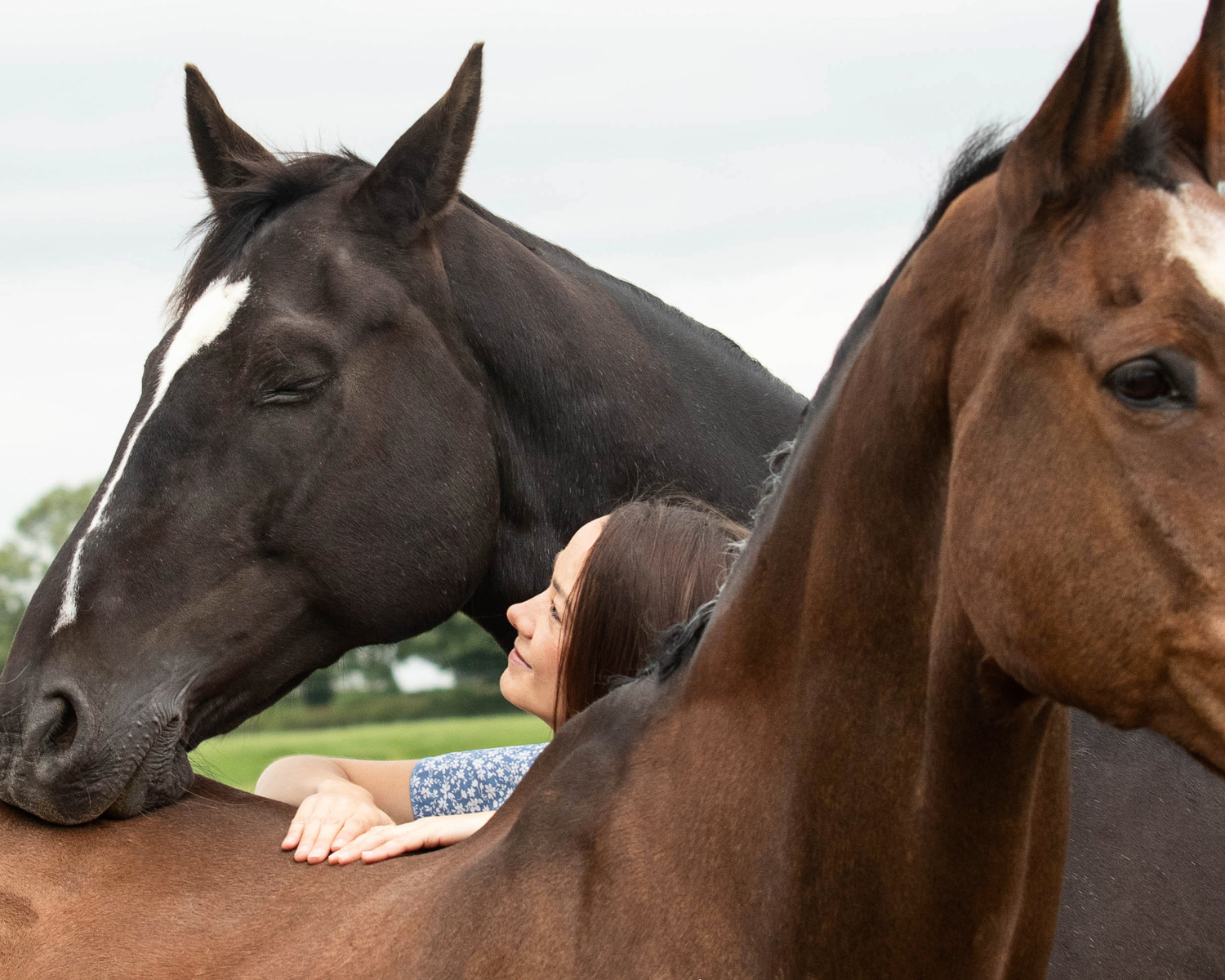
- Every session is designed to feel like a relaxed, quiet walk rather than a production, with flexible presence options ranging, for example, from being fully in the frame to just a simple hand on a wither.
- Works with the horse’s natural responses and your shared rhythm, so that the shoot becomes a reflection of reality rather than a staged event.
- Will stop while things are going well. I make it a priority to recognise that 'peak' moment and call it a day, preserving your horse’s confidence and keeping the experience positive for the future.
I don't expect your horse to act like a statue, I will set them up for success instead. If they fidget, or if they’re a bit strong that day, it’s okay, I work in a behaviour-led approach and will adjust to each partnership accordingly. Some of the strongest shots come from those moments of movement and spirit. We have plenty of time, so there’s never a need to rush.
on the day
I recommend having to hand where possible:
- A family member, groom or best friend for the session is great for moral support if you are nervous, holding your horse and catching their attention for ears forward.
- A towel or even baby wipes for last-minute slobber, eye dust or stable stains.
- Soft hair body brush for a final flick-over.
- Choice of bridle or headcollar, and any other tack required.
- Small bag or box full of your horses favorite treats to use if needed.
- Some noise making items like a crinkly crisp bag or keys to get their ears forward, if you forget then we can improvise.
- Fly spray for the warmer seasons.
- A poop scoop, bucket for water, extra headcollar, travel boots and rug etc. if you are transporting to a location.
Preparation is just about giving us the best set up to work with. Once I arrive, you can hand over to me and just focus on the time with your horse.
You need a photographer who understands equine behavior well enough to navigate the session with conviction, ensuring the bond is the only thing that shows up in the final frame.
Explore my portfolio here to see how these preparations come to life, or connect with me here with any questions about how a session works for you, at your yard.